

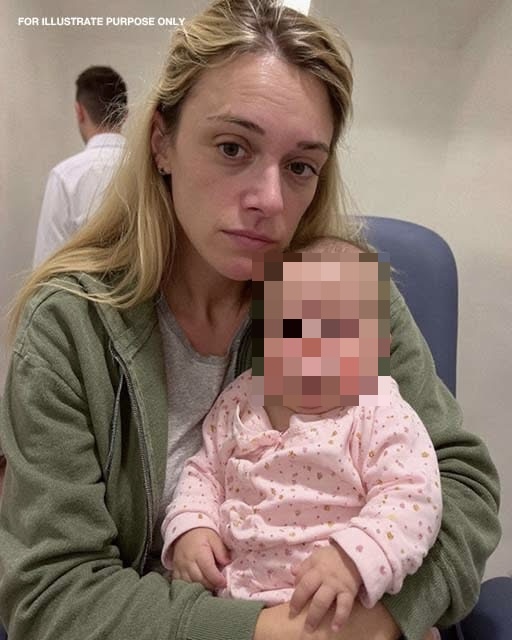
Three weeks old. She’s burning up.”
“Follow me.”
My knees nearly gave way with relief. I grabbed my diaper bag and hurried after him.
Sophia whimpered weakly against my chest, the sound breaking me more than her screams. Behind me, the Rolex man exploded. “Excuse me!
I’ve been waiting over an hour. I have chest pain. Serious chest pain.
Could be a heart attack!”
The doctor stopped, turned slowly, and gave him a long look. “And your name?”
“Victor Hale,” the man declared, puffing out his chest as if it were a title. “I Googled it—could be cardiac arrest!”
The doctor tilted his head.
“You’re not pale. You’re not sweating. You’re breathing normally.
You walked in without difficulty, and you’ve spent the last half hour harassing my staff. My guess? Pulled muscle.
Maybe from your golf swing.”
The waiting room froze. Someone snorted. Monica, the nurse, bit back a smile.
Victor’s face reddened. “This is outrageous!”
The doctor’s tone hardened. “This infant has a fever of 101.7.
At three weeks, that’s a medical emergency. Sepsis can develop within hours. If we don’t act quickly, it could be fatal.
So yes, Mr. Hale, she goes before you.”
Victor sputtered, but the doctor raised a finger. “And if you ever speak to my staff that way again, I will personally escort you out.
Your money doesn’t impress me. Your watch doesn’t impress me. And entitlement definitely doesn’t impress me.”
For a heartbeat, the room was silent.
Then, from the back, a slow clap began. Another joined in. Soon, the entire waiting room erupted in applause.
I clutched Sophia tighter, stunned, as Monica gave me a reassuring nod. “Go,” she mouthed. Inside the exam room, the air was cooler, calmer.
The doctor—his badge read Dr. Bennett—examined Sophia gently, asking questions in a steady, soothing voice. “How long has she had the fever?”
“Since this afternoon,” I whispered.
“She wouldn’t eat much. Then she just wouldn’t stop crying.”
He checked her breathing, her oxygen levels, her skin tone. My heart pounded with every pause.
Finally, he looked up and smiled softly. “Good news. It’s a mild viral infection.
No signs of meningitis, no sepsis. Her lungs are clear. Oxygen’s fine.
We’ll bring the fever down and monitor her, but she’s going to be okay.”
The relief nearly buckled me. Tears slid down my cheeks as I covered my mouth. “Thank you.
Thank you so much.”
“You did the right thing,” Dr. Bennett said gently. “Don’t let people like that man out there make you doubt yourself.”
A little while later, Monica came in with two small bags.
“These are for you,” she said. Inside one bag were formula samples, diapers, wipes, and bottles. The other held a soft pink blanket and a handwritten note: You’ve got this, Mama.
I blinked rapidly, unable to hold back my tears. “Where did these come from?”
“Donations,” Monica said warmly. “Other moms who’ve been in your shoes.
And some of us pitch in, too.”
For the first time in weeks, I didn’t feel completely alone. By the time Sophia’s fever broke and she finally fell asleep, I was drained but lighter, as if the weight on my chest had shifted. As I carried her back through the waiting room toward the exit, Victor still sat there, arms crossed, face flushed.
His sleeve was tugged down over the Rolex. No one looked at him. But I did.
And I smiled. Not a smug smile—just a quiet one. A smile that said, You didn’t win.
Then I stepped out into the night, my daughter safe in my arms, feeling stronger than I had since the day she was born.