

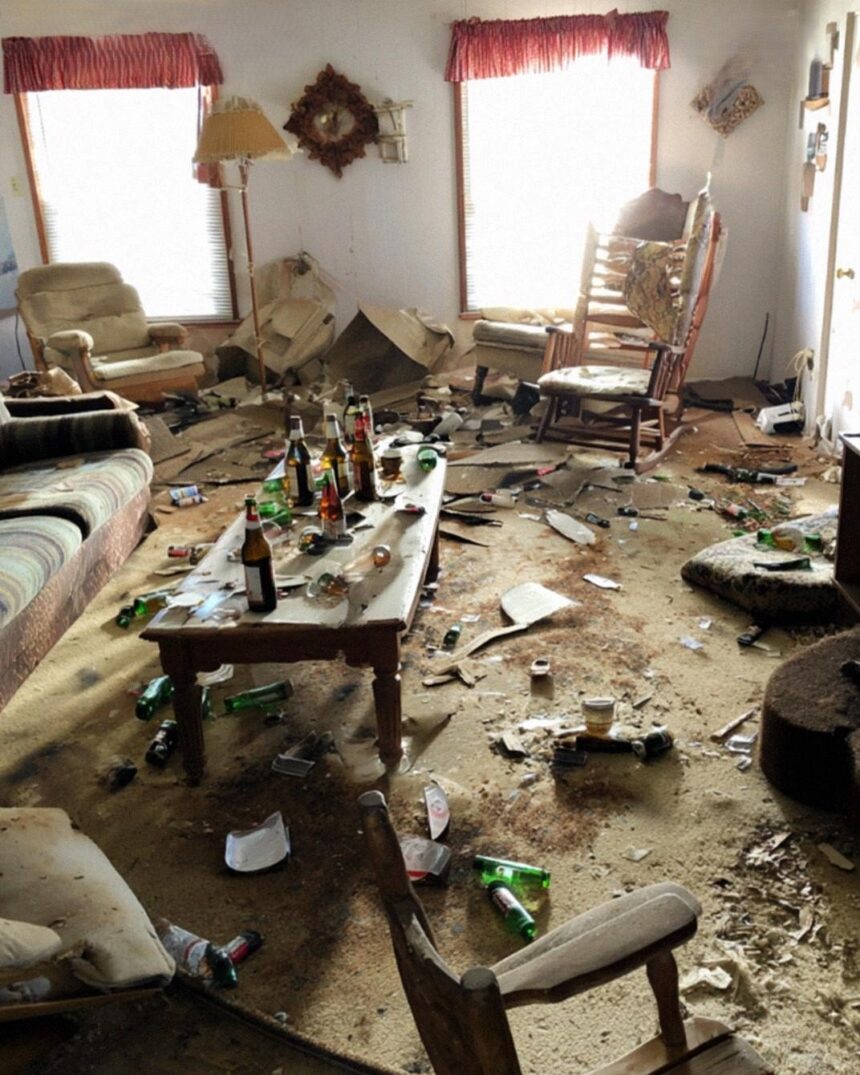
You could’ve sold this and used the money. Or rented it yourself.”
“I’m not charging strangers to destroy something I love,” I said. Steven didn’t raise his voice.
He didn’t have to. “She’s right, Mom. You crossed a line.
I can’t look at you the same.”
“You’re taking her side?” Susan spat. “I saw the damage,” he said evenly. “I hear how you talk to my wife.
In what world would I be on yours?”
Susan spat on the floor. Then she slammed the door on her way out so hard the cracked window shivered. Silence took a breath.
It wasn’t heavy. It was clean. Like something toxic had been scraped out of the air.
Steven took Rosie to the fish-and-chips place in town because the kitchen still smelled wrong. I found a stubby lavender candle in a cupboard, lit it, and opened every window. Daniel and I wrapped ourselves in old quilts on the porch.
I’d stashed cocoa concentrate in the car—insurance against a bad day—and poured us both a cup. “You think Dad will want cocoa?” Daniel asked, leaning into me. “He’ll need two,” I said.
“He did a lot.”
Cocoa wouldn’t fix it, but it was proof we still had warmth to give. They came back with paper-wrapped dinner that made the whole house smell like vinegar and salt. We ate on the porch steps.
For a moment, it was almost simple again. In the morning, I drove into town for new locks while Steven patched the window and braced the frame with sanded scrap from the shed. By noon, the house looked less like a vandalized memory and more like something we could grow into.
My phone rang. Susan. “There’s been a flood—burst pipe,” she said.
“My home is destroyed. Let me stay with you. Please, Becky.
I’ll sleep on the couch. The floor.”
“You should have hotel money,” I said. “After all, you made some renting out my property.”
Her gasp snapped in my ear.
I hung up. That evening, the air smelled like lemon cleaner and sea salt. The wind rattled the porch rail.
Inside, everything was still. We let the ocean claim us. Daniel and Rosie sprinted toward the water, leaving deep little craters of footprints.
Steven helped them dig moats and carve turrets, laughing when the tide erased their work. The sun warmed my shoulders. Something in my chest unclenched.
On our last night, Steven lit the grill. The scent of charred burgers drifted through the open windows. Rosie tucked her stuffed rabbit under one arm and danced around the yard, and Daniel set the table with the solemnity of a maître d’, talking about how many pillows it would take to build the biggest fort in the state.
Their laughter threaded through the rooms. The walls felt like they were absorbing it, stitching it into all the places that had been torn. Later, under quilts, they whispered about paint colors and curtains for “next time.” Rosie voted pink.
Daniel wanted maps and a string of lights and a secret password only we would know. I sat with Steven on the couch, tea in a chipped mug warming my hands. He glanced over.
“You okay?”
“I will be,” I said. “It’s coming together,” he said softly. “We’ll keep making it a home.”
Home, I realized, wasn’t lace curtains or a perfect porch.
It was the people who refuse to give up—on a house, on a marriage, on a woman who inherited more than four walls. It was cocoa on a bad day and changing the locks and choosing the kind of quiet that lets you sleep. I blew out the lavender candle.
The ocean kept talking. And for the first time since we’d opened the door on that sour air, I fell asleep without dreaming of anything broken.